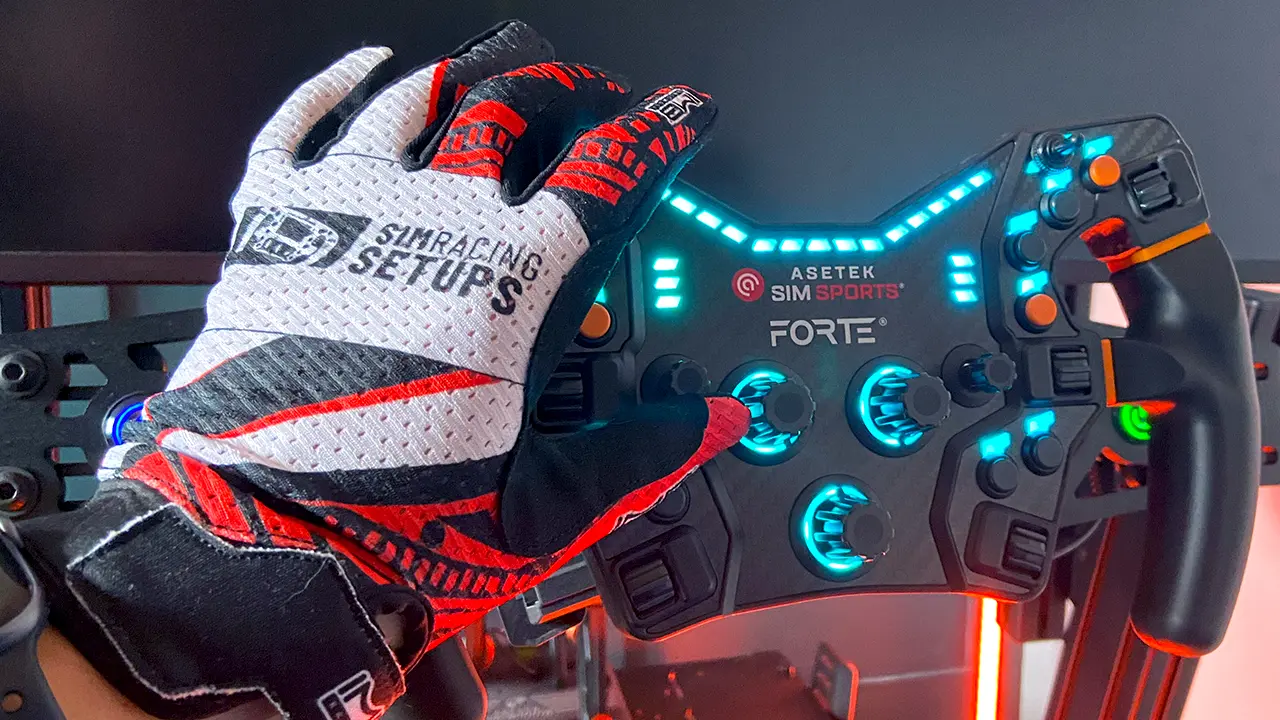
Sim racing gloves are made primarily from thin leather, Alcantara, and suede — materials chosen for their ability to transmit steering wheel feedback without adding bulk between your hands and the rim. Unlike motocross or karting gloves, which prioritise impact protection, sim racing gloves exist almost entirely to improve grip, reduce sweating, and let you feel the road through force feedback.
This post covers every material you are likely to encounter, what it means in practice, and what to look for when specifying gloves for your brand or team.
Leather: the traditional choice
Full-grain cowhide leather has been used in driving gloves for over a century. It is durable, breaks in over time to the shape of the user's hand, and provides excellent natural grip. For sim racing, the relevant variant is thin leather — typically 0.5 mm to 0.8 mm thick, as opposed to the 1.2 mm or heavier hides used in motocross or motorcycle gloves.
At that thickness, leather retains enough tactile transparency to feel the steering wheel texture clearly while still offering the wear resistance needed for repeated use. Perforated leather adds ventilation on the palm side, reducing moisture build-up during long sessions.
Cowhide vs lambskin: Cowhide is tougher and more cost-effective for OEM production. Lambskin is softer out of the box but wears faster. For team-branded sim gloves intended for regular use over a full season, cowhide is the more practical specification.
Alcantara: the premium surface
Alcantara is a synthetic microfibre material developed in the 1970s, now widely used in motorsport interiors, steering wheel rims, and — increasingly — sim racing gloves. Its properties make it well suited to the application:
- It grips a suede-wrapped steering wheel rim firmly without sticking, enabling quick hand movements.
- Its fine texture allows it to be used in very thin layers without losing structural integrity.
- It resists light moisture and does not degrade as quickly as natural leather when exposed to sweat.
- It is available in a wide range of colours, making it easy to match team branding.
The one practical drawback is price. Alcantara costs more per square metre than standard cowhide, so gloves using it sit at the upper end of the price range. For OEM clients targeting the premium sim racing market, Alcantara palm panels are a strong selling point.
Suede: the mid-market option
Suede offers a texture and grip profile very similar to Alcantara at a lower cost. It is the most common palm material on mid-range sim racing gloves. The nap surface grips suede-wrapped wheels naturally and is available in dyed colours for branding purposes.
Its main limitation compared to Alcantara is moisture sensitivity. Suede can stiffen slightly after heavy sweat exposure, though this is generally not a concern for casual sim racing sessions of under an hour. For esports teams with high-volume practice schedules, Alcantara or perforated cowhide may be more durable over a full season.
Lycra and stretch fabrics: the back of the hand
The dorsal (top) side of a sim racing glove does not make contact with the steering wheel, so the material requirements are entirely different. The priorities here are:
- Stretch in multiple directions, allowing the hand to open and close freely.
- Breathability, to reduce heat build-up during long sessions.
- Low profile, so the glove does not catch on buttons, paddles, or handbrake handles.
The most common materials for the back of the glove are Lycra, stretch mesh, and spandex blends. All are lightweight, stretch in four or eight directions, and are available in a wide range of colours. Perforated mesh panels are sometimes added at the knuckles or between the fingers for maximum ventilation.
For race team branding, the back panel is also where printed or embroidered logos and driver numbers appear. A flat Lycra surface takes sublimation printing well and holds colour accurately.
Silicone grip prints
Many sim racing gloves feature printed silicone patterns on the palm or fingers. These serve a specific purpose: on a leather or suede rim without a lot of surface texture, silicone micro-dots or patterns add friction, preventing the glove from rotating on the wheel under strong inputs. This is particularly relevant for sim racers using high-force-feedback settings.
The print pattern is typically applied using screen printing or heat transfer, and the silicone compound used is the same class of material used on cycling gloves and goalkeeper gloves. It adds negligible thickness and does not significantly affect tactile feedback.
Stitching and construction
The seam construction of a sim racing glove affects comfort and feel as much as the materials themselves. There are three main approaches:
External stitching places seam allowances on the outside of the glove, keeping the inner surface smooth. This is the most comfortable option for direct wheel contact but looks less refined.
Internal stitching hides seams inside the glove for a cleaner appearance. This can create pressure points on the palm over long sessions if the seam falls on a high-contact area.
Touchscreen fingertips are sometimes included on the index finger and thumb, using a conductive yarn or fabric patch that allows interaction with touchscreens without removing the glove. This is more relevant for track day gloves than dedicated sim applications but is a popular option with recreational buyers.
Wrist closures
Sim racing gloves use either an elasticated wristband or a velcro closure strap. Elasticated cuffs are more common on open-back short-cuff designs and offer a snug fit with no adjustment needed. Velcro straps allow for a more precise fit across different wrist sizes and are often preferred for team-branded gloves where a consistent appearance matters.
Choosing the right specification for your brand
If you are sourcing custom sim racing gloves for a brand, team, or retail range, the material specification should match your target market and price point:
- Entry-level to mid-range: Synthetic leather or suede palm, Lycra or stretch mesh back, elasticated wrist, basic silicone grip print.
- Mid-range to premium: Thin cowhide or suede palm with perforations, stretch mesh or woven back panel, velcro closure, silicone grip print, sublimation branding.
- Premium: Alcantara palm, premium stretch mesh back, velcro closure, silicone grip dots, full sublimation or embroidery branding.
All three specifications are available for OEM production. Minimum order quantities and lead times vary depending on the degree of customisation. Pre-production samples are available before any full production run.
Summary
Sim racing gloves are made from a small range of well-understood materials: thin leather, Alcantara, suede, and stretch fabrics. The choice between them affects grip, durability, comfort, and price. For OEM buyers, understanding these trade-offs is the starting point for specifying a glove that performs correctly for your customer and sits at the right price point in your range.
If you are developing a branded sim racing glove range or outfitting a race team, get in touch with our team for a no-obligation quote. We produce sim racing gloves from our factory in Sialkot, Pakistan, with worldwide shipping and sample approval before production.